

Overmolding in Malaysia
Overmolding is a process in which a second material is moulded over an already-formed substrate — typically a soft-touch TPE, TPU or TPV bonded onto rigid ABS, PC/ABS or nylon — producing a multi-material part in one assembly. Ichiplas provides overmoulding from Johor Bahru, Malaysia on 50–360 tonne presses under ISO 9001:2015.
Capability at a glance
- Clamping force
- 50–360 tonnes
- Molded tolerance
- ±0.02–0.05 mm (20–50 µm)
- Overmold materials
- TPE, TPU, TPV
- Substrate materials
- ABS, PC, PC/ABS, PBT, POM, nylon (PA6/PA66)
What is Overmolding?
Overmolding is a sophisticated process where one material is injection molded over a pre-existing substrate, which can be plastic, metal, or other materials. This technique creates a strong bond between the components, resulting in a single, integrated part with enhanced properties.
Key aspects of overmolding include:
- Combining different materials for optimal performance
- Creating mechanically or chemically bonded parts
- Improving both functional and aesthetic design elements
With more than a decade of specialized experience in overmolding, Ichiplas has developed the expertise and capabilities to tackle even the most challenging projects. The versatility of our overmolding processes enables the production of complex products at scale, maintaining both speed and quality throughout the manufacturing process.
Overmolding
The Ichiplas Advantage
Competitive Pricing
Overmolding significantly reduces the need for post-production assembly, leading to:
- Shorter production cycles
- Lower labor costs
- Reduced overall production time
- More competitive pricing for complex parts
Enhanced Durability
The overmolding process creates a tighter bond between materials compared to traditional assembly methods. This results in:
- Improved impact resistance
- Extended product lifespan
- Better performance in challenging environments
- Reduced risk of component separation
Unparalleled Customization
Our overmolding capabilities allow for an extensive range of material combinations, including:
- Plastic-fabric
- Plastic-metal
- Plastic-plastic
- And many more
Used across various industries
Applications of Overmolding
Overmolding is utilized across various industries to create products that require soft-touch grips, waterproof or chemical resistant seals, vibration dampening, improved ergonomics, aesthetic enhancements, electrical insulation and more. Common applications include:
- Consumer electronics
- Examples: smartphone cases, tool handles
- Automotive components
- Examples: dashboard controls, gear shifts
- Medical devices
- Examples: surgical instruments, wearable health devices
- Sporting goods
- Examples: bicycle grips, golf club handles
Our Overmolding Process
At Ichiplas, we follow a rigorous process to ensure the highest quality overmolded parts:
- Design Consultation and Material Selection
- Collaborate on design specifics and select ideal materials for optimal performance.
- Prototyping and Testing
- Create and rigorously test prototypes to verify design and material compatibility.
- Mold Design and Fabrication
- Design and fabricate custom molds using advanced CAD/CAM and CNC technologies.
- Production of the Substrate Component
- Create precise substrate components using injection molding or machining techniques.
- Overmolding Process
- Inject overmold material onto substrate, ensuring strong bond and consistency.
- Quality Control and Testing
- Conduct comprehensive quality checks, including dimensional, strength, and functional testing.
- Final Assembly and Packaging
- Assemble additional components and package products for safe, secure shipping.
Frequently Asked Questions
- What materials can be overmolded together?
- Common overmolding combinations include TPE over ABS, PC, or PP for soft-touch grips; TPU over PC/ABS or Nylon for durable flexible surfaces; and TPV over PP for industrial seals and gaskets. Material compatibility depends on chemical polarity and surface energy — not all combinations bond well. At Ichiplas, we validate material compatibility during the DFM phase and can recommend optimal material pairings for your application.
- What is the difference between overmolding and two-shot molding?
- In overmolding, the substrate is molded first, then placed into a second mold where the overmold material is injected over it — using two separate molding cycles. Two-shot (or 2K) molding uses a specialised machine that injects both materials in a single cycle with a rotating mold. Two-shot is faster for high volumes but requires more expensive tooling and equipment. Overmolding is more flexible and cost-effective for lower volumes.
- Can you overmold soft-touch grips onto electronics enclosures?
- Yes — this is one of our specialties. We have over a decade of experience producing overmolded consumer electronics, including complex multi-material cosmetic casings. Typical combinations include TPE or TPU soft-touch surfaces over PC or ABS rigid housings. Our expertise extends to ensuring the bond between materials is durable under real-world use conditions including drops, temperature cycling, and repeated handling.
- Does overmolding add significantly to mold cost?
- An overmolded part requires two molds (one for the substrate, one for the overmold), so tooling cost is roughly double compared to a single-material part. However, overmolding eliminates secondary assembly steps — such as gluing grips, inserting gaskets, or snapping on covers — which can offset the additional tooling cost through reduced labour and faster cycle times.
- What industries use overmolded parts?
- Overmolding is widely used in consumer electronics (soft-touch device casings, button pads), power tools (ergonomic grips), medical devices (sealed housings, comfortable handles), automotive (dashboard components, door handles), and consumer products (kitchen tools, personal care devices). Any product that benefits from combining rigid structure with flexible or soft-touch surfaces is a candidate.
Project Examples
Our showcase exemplifies the consistent excellence that defines Ichiplas. From the smallest parts to complex assemblies, we maintain the same high standards across all our products, ensuring you receive nothing short of the best, every single time.
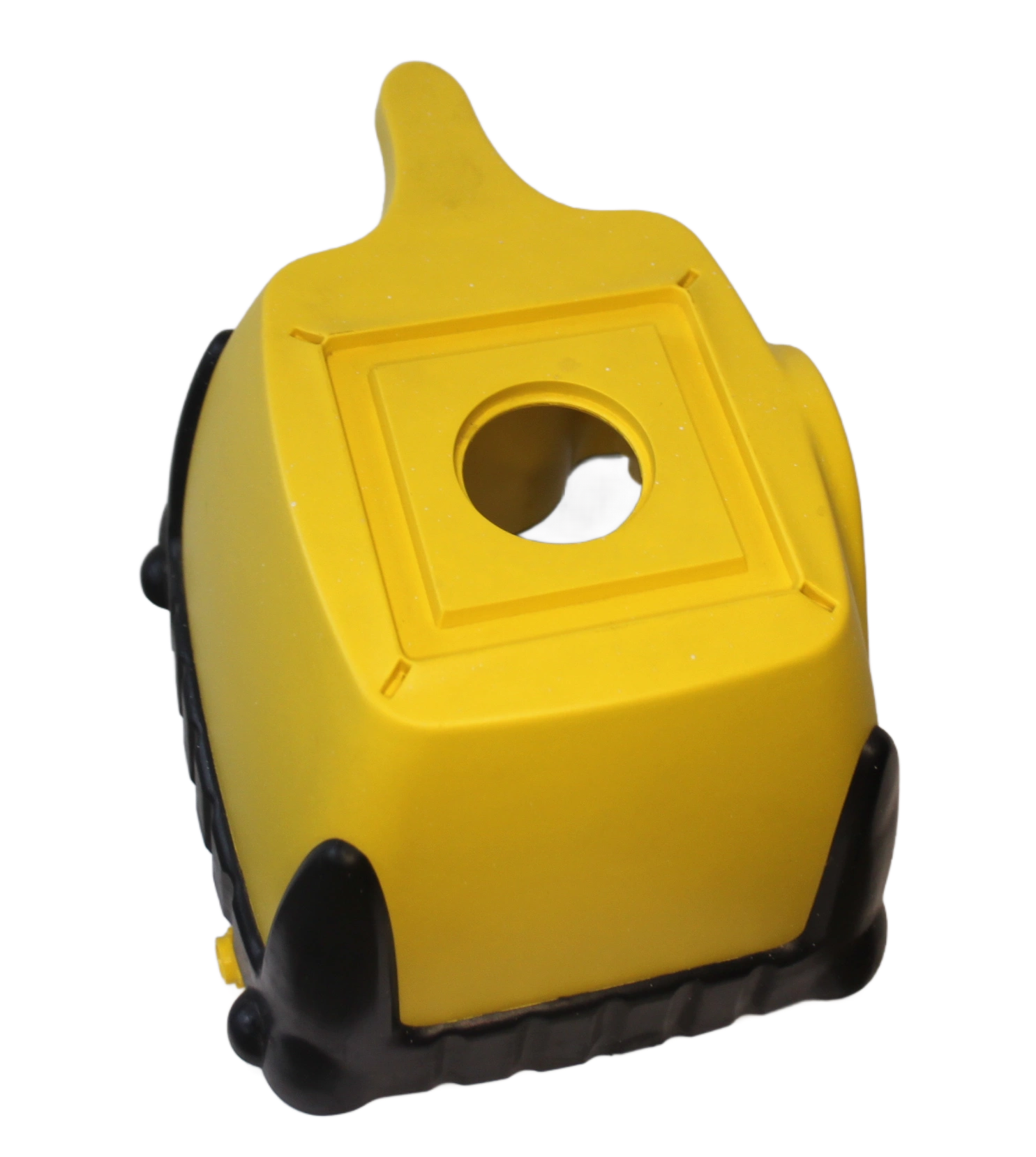
Overmolded Electronics Casing
A highly complex double overmolded casing.
Process: Double overmolding process and insert molding with magnet
Materials: PA66 with TPU
Dimensions: Outer diameter: 20cm, Height: 18cm
Applications: Electronics casing and assembly
Advantages: Fire-rated for integrated charging, magnetic quick-release capability
Key Features:
- Complex multi-material cosmetic design
- Integrated magnet for secure fitting
Get Free Quote
Contact us today to learn more about our services and how we can help you with your next project.